



The latest Iranian attacks suggest that the conflict has rapidly spread beyond the original battlefields, threatening energy infrastructure and stability throughout the region. Experts believe that if these continued attacks on Gulf states keep occurring, they may pull many more nations into the conflict.
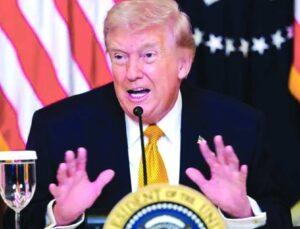
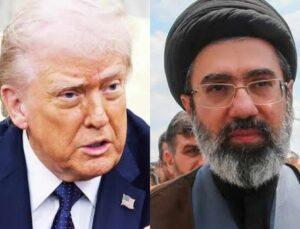
Most of the confusion coming from the U.S. is caused by Donald Trump, who has sent conflicting messages to different groups about whether he will continue or escalate the military conflict between Iran and U.S.-backed Gulf states.
For instance, AP reported that he told Republican senators last week that the current hostilities could only lead to a “short-term excursion” by U.S. forces. Less than 12 hours later, he tweeted that Iran will be dealt a far more severe blow if they disrupt the flow of oil through the Strait of Hormuz.
He indicated that “If Iran does anything that stops the flow of Oil within the Strait of Hormuz, they will be hit by the United States of America TWENTY TIMES HARDER than they have been hit thus far.”
These different interpretations have made it hard to know if the conflicts will come to a fast resolution or if we are going to have a more drawn-out regional war.
Iran’s comments regarding the responses given by the United States of America were quick, with Iranian officials stating that the United States will never dictate when the region is at war.
Iran would decide when their conflict would cease.
Iran has demonstrated its willingness to continue that conflict until such time that it considers it resolved in their favor.
While some say that outside pressure (i.e., economic sanctions) might lead to diplomatic talks with other countries by others, they say Iran will continue to fight until they have exhausted the means to do so.
Many people have an anxiety about this war due to its key strategic location, the Strait of Hormuz, because of its narrow shipping area between an enemy nation (Iran) and the people of the Arabian Peninsula.
20% of oil supply to global economy flows through this waterway, thus making it one of the world’s most critical energy chokepoints
Iran’s attacks on shipping in the strait and threats against merchants and shipping lines have forced some tanker vessels to avoid shipping along that route, and there is also evidence that some energy facilities and other infrastructure in the vicinity of the strait have ceased to operate as a result of security considerations.
Energy firms have warned that a continued closure of the strait would precipitate a worldwide energy crisis, with a significant impact on financial markets, and with the Saudi government’s enormous oil firm, Saudi Aramco, declaring that the closure of the strait would “have catastrophic repercussions for global markets.”
Oil Price and Global Market Response
Financial markets responded adversely to the circumstances arising from the conflict in the Middle East, with oil prices spiking dramatically due to investor fear of supply disruptions related to the war in Iraq.
At one time, oil prices soared to almost $120 per barrel (the highest level experienced since 2022) before dropping off as former President Trump stated that the clemency arrangements with Iraq might likely be settled very soon.
The market also reflected its volatility through the stock market and the U.S. stock market specifically experienced a drastic swing, tumbling early in the day and eventually rebounding as investment hopes were reported as a result of responsibility-ending statements from the warlords in Iraq.
The extraordinary instability in the markets related to the conflict in Iraq demonstrates the severe economic ramifications of violence and instability in one of the most important energy transportation routes in the world.
In addition, numerous human and social costs associated with the violence will be incurred.
Many lives are lost in this conflict, with more than 1,230 reported dead in Iran, 397 dead in Lebanon, and 11 in Israel, according to officials. Meanwhile, many civilians have escaped from large cities, and damage to the different facilities in the countries has impacted daily life throughout the area.
Bombs and missiles have struck military bases, governmental buildings, and other places throughout many countries in the region.
The war has impacted transportation and international trade. Many U.S. diplomatic missions throughout the area have ordered most of their people to leave because of safety risks.
Energy Infrastructure Has Experienced Attacks
Throughout the Gulf region, Iranian drones and missiles have struck oil and gas infrastructures in increased frequency. As the fighting continues to escalate in the region, many energy facilities in Saudi Arabia, Iraq, Qatar, and the United Arab Emirates have experienced disruptions.
For example, many of the large energy sites (refineries, pipelines, and LNG terminals) have reduced or eliminated operation due to security issues.
In addition, even when an attack results in limited physical damage, companies regularly pause production to preserve the safety of their employees and equipment. Any time these companies experience disruptions to their operations, it results in a ripple effect through the global markets, as Gulf area producers provide a large percentage of the world’s energy.
War’s Ripple Effects Extend Beyond Armed Combat
This conflict is causing effects that go much deeper than military strategies and energy prices; it is already disrupting travel and causing evacuations and economic disruptions to daily experiences.
International sports are also affected. The Iranian cross-country skier Aboulfazl Khatibi had to withdraw from the Winter Paralympics because it was unsafe for him to travel to Italy during the ongoing war.
In a statement, officials from Iran’s Paralympic Committee explained that the situation had very negatively impacted all of the athletes they have trained with for many years.
They stated: “The recent events have been very painful for many people, and it is especially heartbreaking for athletes who have dedicated years of hard work.”
As you can see from this example, the fallout from the conflict is being experienced in many ways beyond just fighting.